FBR Tax Return Last Date 2026: 30 September Deadline, Penalties & Extension News

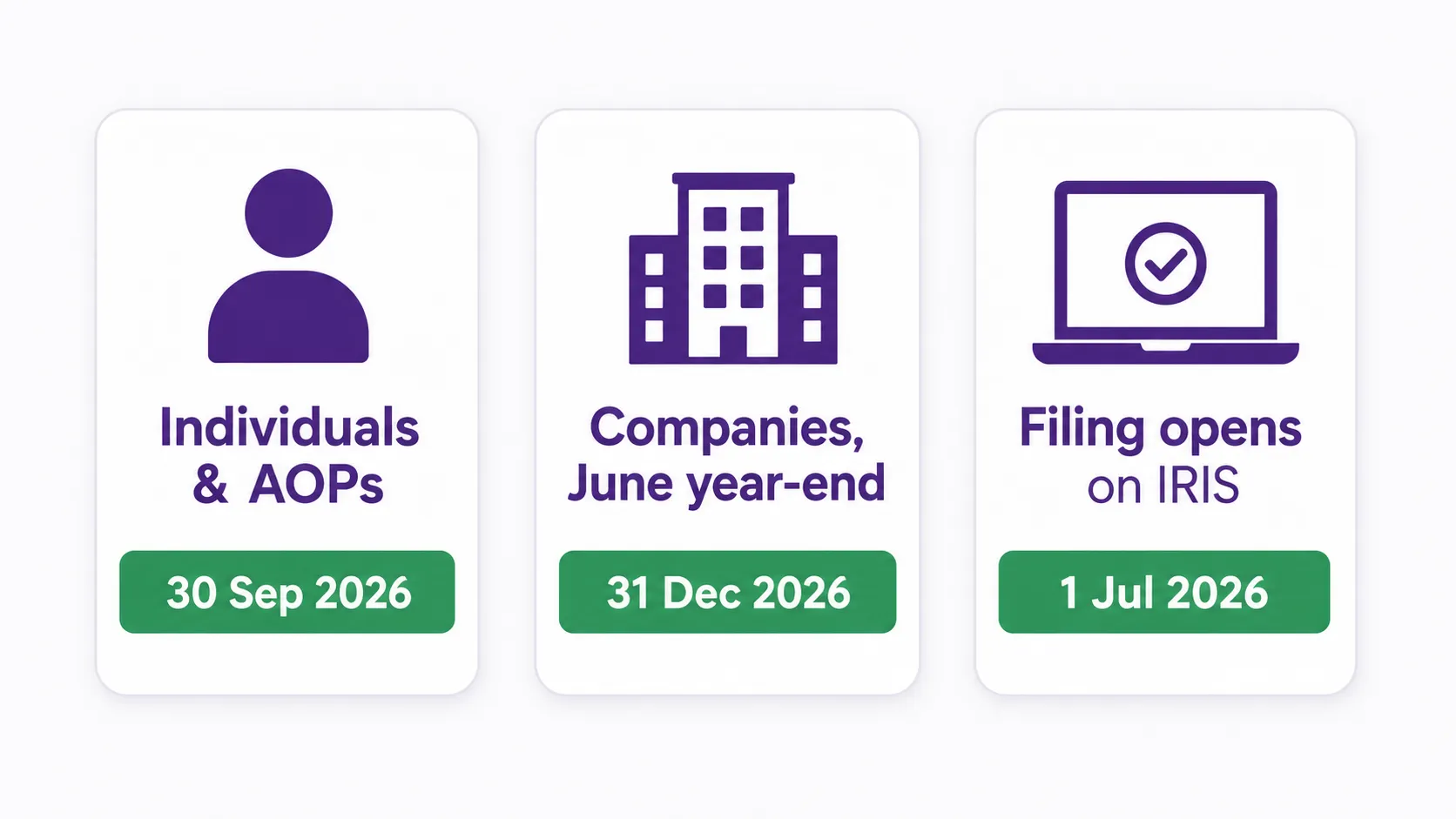
The FBR income tax return last date for Tax Year 2026 is Tuesday, 30 September 2026 for salaried individuals, other individuals, and Associations of Persons (AOPs). Companies with a 30 June year-end have until 31 December 2026. Filing opened on 1 July 2026 on the IRIS portal.
That's the answer most readers came for. What follows is everything the date doesn't tell you: exactly who must file, what a missed deadline actually costs in 2026 (it's more than the Rs 1,000/day penalty), how the new late-filer rules changed the game, whether an extension is likely, and how to file without the last-week IRIS crawl.
Every FBR deadline for Tax Year 2026 at a glance
Tax Year 2026 covers income earned from 1 July 2025 to 30 June 2026.
| Taxpayer | Return | Last date |
|---|---|---|
| Salaried individuals | Income tax return + wealth statement | 30 Sep 2026 |
| Business individuals & AOPs | Income tax return + wealth statement | 30 Sep 2026 |
| Companies (year-end 30 Jun 2026) | Corporate return | 31 Dec 2026 |
| Companies (year-end 31 Dec 2025) | Corporate return | 30 Sep 2026 |
| Overseas Pakistanis | Same as residents | 30 Sep 2026 |
| NTN holders with nil income | Nil return (keeps ATL status) | 30 Sep 2026 |
Don't forget the monthly returns
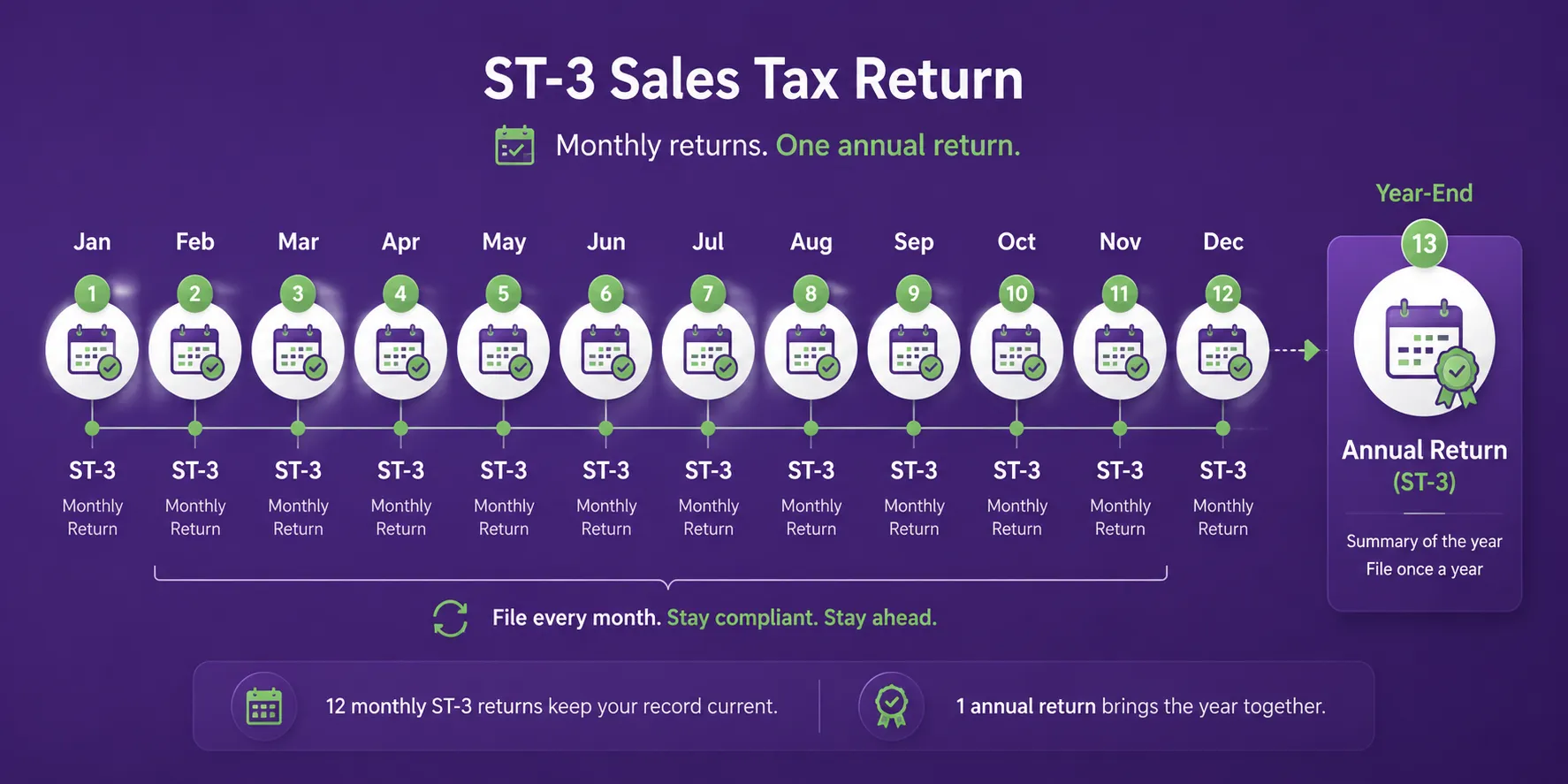
Separate from the annual return, sales-tax-registered businesses file the monthly return every month: Annexure-C (sales) by the 10th, payment by the 15th, and the return by the 18th of the following month. Clean monthly filing is what makes the annual return a report you generate, not a project you dread. The year-end picture is just the sum of months you've already reconciled.
Who is required to file in 2026?
You must file a return for Tax Year 2026 if any of these applied to you between July 2025 and June 2026: your income crossed the taxable threshold; you own immovable property, a vehicle over 1000cc, or foreign assets; you hold an NTN or were registered in a prior year; you had tax withheld you want refunded or adjusted; or you simply want to appear on the Active Taxpayer List. If your income was below the threshold but you're NTN-registered, file a nil return. It takes minutes on IRIS and preserves your filer status.
What missing 30 September actually costs
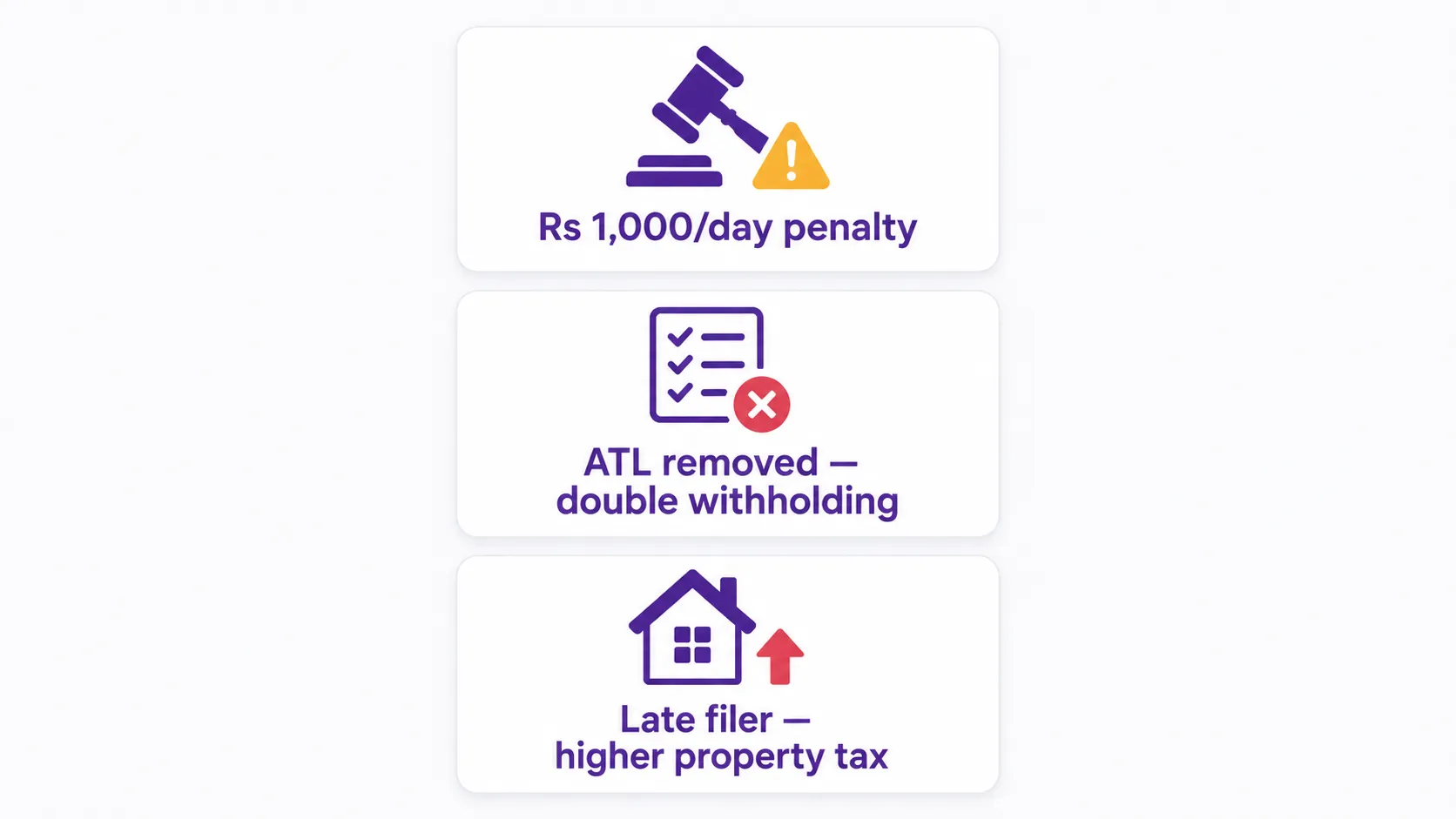
- 1The Section 182 penalty. Late filing attracts a penalty of the higher of 0.1% of tax payable per day of default or Rs 1,000 per day, subject to minimum penalties (Rs 10,000 for salaried individuals; higher for others). Filing late doesn't erase the penalty; it stops it growing.
- 2Loss of Active Taxpayer List (ATL) status. Off the ATL, withholding rates roughly double across everyday transactions: bank profit, cash withdrawals, vehicle registration, and property. To get back on the ATL after late filing you also pay the ATL surcharge: Rs 1,000 (individuals), Rs 10,000 (AOPs), Rs 20,000 (companies).
- 3The "late filer" trap. Since the Finance Act 2024, filing after the deadline can mark you as a late filer, a middle category with higher advance tax rates on property transactions (Sections 236C/236K) than regular filers, even after you're back on the ATL. Deadline discipline now has a price tag measured in property tax percentage points, not just penalty rupees.
- 4Notices and audit exposure. FBR increasingly matches withholding, banking, and digital invoicing data against returns. Non-filers and mismatched filers are first in line for Section 114 notices, and with FBR's expanded audit staff in 2026, detection is faster than it used to be.
Will FBR extend the 2026 deadline?
History says: don't count on it. For Tax Year 2024, FBR extended the date to 31 October 2024. But for Tax Year 2025, FBR publicly refused, issuing a press release (PR No. 292) calling extension reports "false, baseless, and misleading" and holding the line at 30 September, pointing to its new simplified return form. The direction of travel is clear: FBR wants the September date treated as real.
Treat 30 September 2026 as final
An extension, if it ever comes, arrives by SRO in the final days, after the IRIS slowdown, the panic, and the queue at your consultant's office. Businesses that plan around an extension are the ones most exposed when it doesn't come.
How to file (and what you'll need)
File on iris.fbr.gov.pk: log in with your CNIC/NTN, then Declaration → Income Tax Return → Tax Year 2026. Have ready:
- Complete sales register (ideally already transmitted to FBR through digital invoicing)
- Purchase invoices and input-tax records
- Salary certificate and/or financial statements
- Withholding tax statements, certificates, and challans
- Bank statements and reconciliations
- Last year's return, wealth statement, and carried-forward balances

Pro tip from every filing season so far
IRIS is fast in July and August and painful in the last week of September. Filing in the first two months of the season is the entire stress-management strategy.
The stress-free way to be ready
The businesses that file early all have one thing in common: their records were ready the whole time. When your sales flow through FBR digital invoicing in real time, your purchases and payments post automatically to a proper chart of accounts, and your reports reconcile monthly, the annual return is generated, not reconstructed. That's exactly what TaxHub does for Pakistani businesses. Book free consultation.
FAQs
What is the last date to file the FBR tax return for 2026?
30 September 2026 for individuals, salaried persons, and AOPs. Companies with a June year-end file by 31 December 2026.
When did filing for Tax Year 2026 open?
1 July 2026 on the IRIS portal. Tax Year 2026 covers income from 1 July 2025 to 30 June 2026.
Will FBR extend the deadline in 2026?
Unknown, but for Tax Year 2025 FBR publicly refused any extension. File by 30 September; treat any extension as a bonus, not a plan.
What is the penalty for late filing?
The higher of 0.1% of tax payable per day or Rs 1,000 per day of default, with minimum penalties, plus the ATL surcharge (Rs 1,000 individual / Rs 10,000 AOP / Rs 20,000 company) to restore filer status, and possible "late filer" treatment with higher property withholding rates.
Do overseas Pakistanis follow the same deadline?
Yes, it's 30 September 2026, and they can authorize a representative to file via IRIS.
I missed previous years, can I still file?
Yes, prior-year returns can generally be filed within the statutory window; filing back years restores ATL eligibility and stops penalties accruing. Get advice on the wealth reconciliation before filing multiple years at once.
Try TaxHub free: get FBR compliant in 10 minutes
Real-time FBR digital invoicing, complete accounting, and a dashboard that's entirely yours. No credit card required.
File today with TaxHub